
Why Is My Wisteria Not Blooming?

Three years. That’s how long I watched my wisteria grow into a massive green vine without a single flower. I pruned it, fertilized it, talked to it. Nothing worked.
Then last May, it finally bloomed. Forty-seven purple clusters appeared overnight, and I nearly cried in my garden.
The problem wasn’t the plant. It was me. I was doing three things wrong, and once I fixed them, the transformation took just one season.
If your wisteria looks healthy but refuses to bloom, you’re probably making the same mistakes I did. This guide covers the six real reasons wisteria won’t flower, how to diagnose your specific problem, and the exact steps that worked for me.
Quick answer if you’re in a hurry: Most wisteria need 5-7 years to mature before blooming. If yours is older than that, check these three things first: Is it getting at least six hours of direct sunlight? Are you pruning at the wrong time? Did you fertilize with nitrogen? Those three issues cause 90% of blooming problems.
How to Diagnose Your Wisteria Problem
Before you change anything, figure out what’s actually wrong. I wasted a year trying random solutions before I got systematic about it.
Start here:
How old is your plant? If you bought it from a nursery, it’s probably 2-3 years old already. Seed-grown wisteria can take 15-20 years to bloom. If your plant is under five years old, the answer is simple: wait. I know that’s frustrating, but there’s no way around it.
Check the sunlight. This was my problem. I thought “partial sun” meant four hours. It doesn’t. Get a timer and actually track how many hours of direct sunlight hit your wisteria. Not dappled light through trees. Direct, unobstructed sun. If it’s less than six hours, you found your answer.
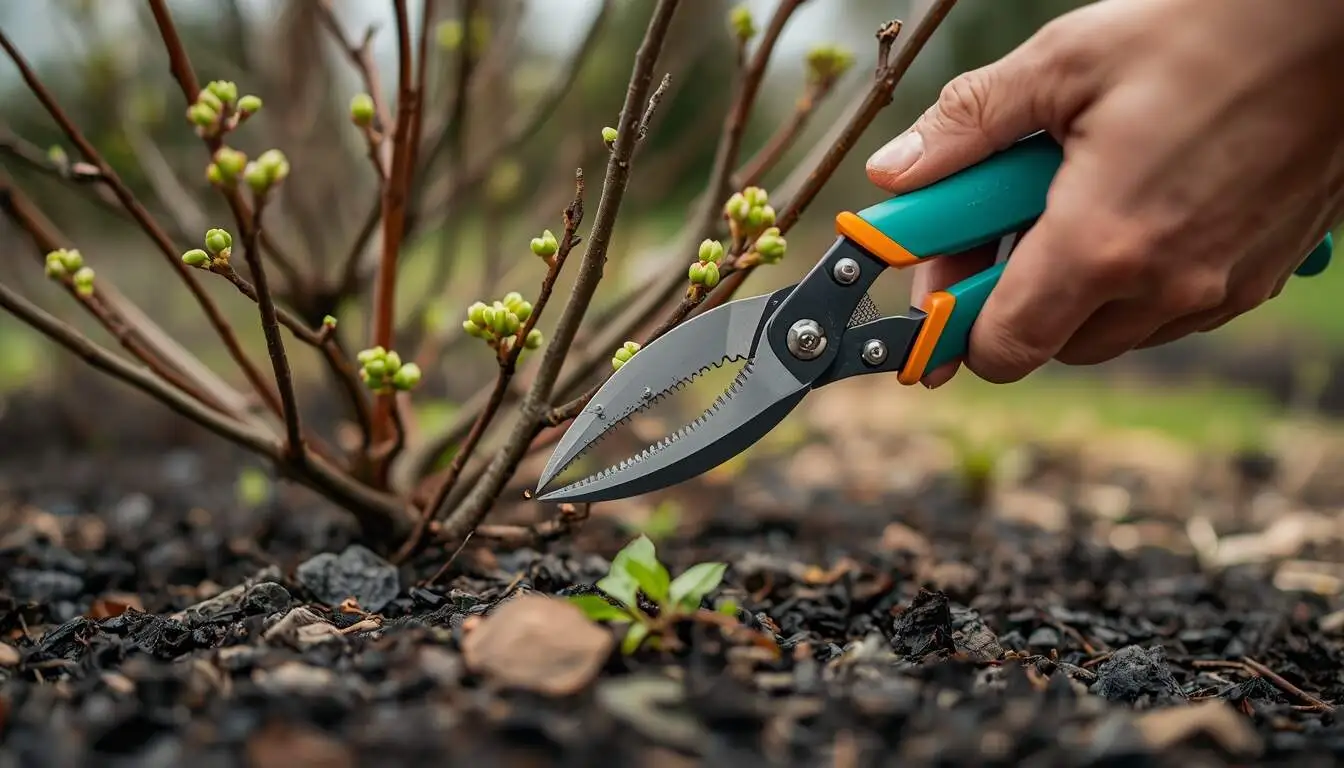
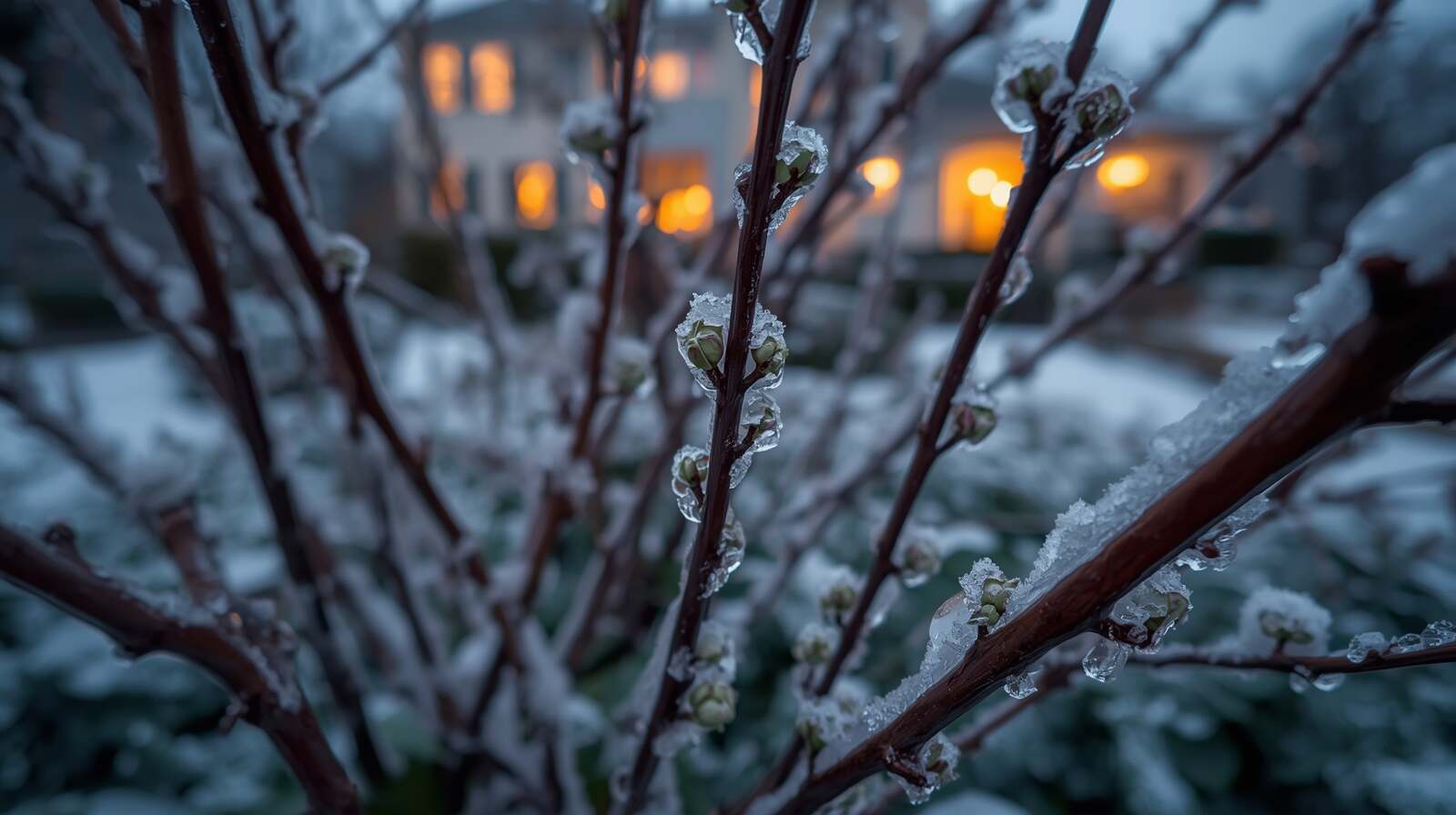
Look at your pruning cuts. Wisteria blooms on old wood from last year’s growth. If you pruned heavily in fall or early spring, you probably cut off all the flower buds. They look like fat little bumps on the stems. Regular leaf buds are flat and pointed.
Dig up some soil. Grab a handful from around the roots. Squeeze it. Does water drip out? Too wet. Does it crumble into dust? Too dry. It should hold together but break apart easily. Also, wisteria hates heavy clay. If your soil is dense and sticky, drainage is your issue.
Think about what you fed it. Did you use regular lawn fertilizer or something labeled “promotes green growth”? That’s loaded with nitrogen. Nitrogen makes leaves, not flowers. Wisteria actually produces its own nitrogen, so adding more just makes the problem worse.
Once you know which category fits your situation, jump to that section below.
Why Isn’t My Wisteria Blooming?
Here’s what I’ve learned after growing three different wisteria plants and talking to the horticulturist at our county extension office: wisteria not blooming is almost never a disease or genetic problem. It’s usually one of six environmental factors you can control.
The tricky part is that the symptoms all look the same. Healthy green vine, no flowers. You have to work backward to find the cause.
I’m going to walk through each factor with specific details from my own experience, what the actual problem looks like, and how to fix it. Some solutions work in one season. Others take years. I’ll be honest about the timeline for each one.
The Factors that Affect Wisteria Not Bloom
Does wisteria bloom every year? No. Although seemingly unbelievable, it’s quite true that the age of the plant, pruning regularity, sunlight, shade, air nutrition, and soil conditions play important roles in the growth and blooming of wisteria. All these stress factors occur due to the gardener’s habit and geographic condition.
Age of the Plant
This is the hardest answer to accept because the solution is just waiting.
Wisteria grown from cuttings or grafts typically bloom in 5-7 years. Seed-grown wisteria can take 15-20 years. Sometimes longer. I didn’t believe this until I joined a local gardening group and met someone who’d been waiting 12 years for their first bloom.
When you buy wisteria from a nursery, ask how it was propagated. Choosing specimens joined via rootstock grafting ensures you are getting a mature plant on young roots, which significantly reduces the time until the first flowering. The tag should say “grafted” if that’s the case. If it just says “wisteria” with no details, assume it needs the full timeline.
Here’s what I did wrong: I bought a one-gallon wisteria from a big box store in 2018. The plant was probably two years old at purchase. I expected flowers by 2020. Didn’t happen. I got my first blooms in spring 2024, exactly six years after planting. The math worked out perfectly, but I spent years thinking something was wrong.
What to do: If your plant is under five years old from the time you planted it, bookmark this page and come back in two years. I’m serious. There’s no fertilizer or technique that speeds up maturity. The plant has to develop enough root system and woody growth to support flowers.
One shortcut: Buy a mature wisteria that’s already blooming in the pot. You’ll pay more (I’ve seen them for $80-150 versus $25-40 for young plants), but you skip the waiting period. Make sure you see actual flowers before buying, not just a picture on the tag.
Improper Pruning
I killed my blooms for two years straight with bad pruning. Here’s what happened and how I fixed it.
Wisteria blooms on old wood. That means the flower buds form in late summer on the current year’s growth, then bloom the following spring. If you prune in fall, winter, or early spring, you’re cutting off those buds before they ever open.
The right pruning schedule:
- Late July or early August: Cut back the long whippy shoots to about five or six buds from the main stem. This is your main pruning. You’re controlling size and encouraging the plant to put energy into flower buds instead of endless vine growth.
- January or February: This is just cleanup. Remove any crossing branches, dead wood, or shoots growing in weird directions. Don’t do major cutting during this pruning. You’re just shaping.
How to identify flower buds versus leaf buds: Flower buds are plump and round, about the size of a pea. They grow along the older, thicker stems. Leaf buds are smaller, pointed, and grow at the tips of new shoots. When I finally learned to spot the difference, I stopped accidentally removing all my flowers.
My specific mistake: I pruned in November because that’s when I had time. I cut the plant back hard, removing about 60% of the growth. I thought I was helping it focus energy. Instead, I removed every single flower bud. Did this two years in a row before someone at the garden center told me what I was doing wrong.
What worked: I pruned in late July 2023, just cutting back the long green shoots. Left all the older woody stems alone. That winter, I only removed two dead branches. Spring 2024, flowers finally appeared.
If you’ve been pruning at the wrong time, stop. Follow the schedule above for one full year and see what happens.
Insufficient Sunlight
This was my main issue, and I fought against accepting it for months because the solution meant moving a massive vine.
Wisteria needs at least six hours of direct, unfiltered sunlight per day to produce flowers. Not morning sun filtered through tree leaves. Not bright shade. Actual sun hitting the plant.
How I figured this out: I bought a cheap light meter for $12 and tracked sunlight for a week in June. My wisteria was getting about 4.5 hours of direct sun, mostly in the morning. The rest of the day, it was in dappled shade from a neighbor’s oak tree. The plant looked healthy and grew like crazy, but no flowers.
What “full sun” actually means: The entire plant doesn’t need to be in sun all day, but the main stems and the area where flowers would form need solid sunlight from about 10am to 4pm. Morning sun alone isn’t enough. The plant needs intense midday and afternoon light to trigger blooming.
My solution: I relocated my wisteria in early March 2023. This was a huge job. The root ball was probably 18 inches across. I dug it up, moved it 15 feet to a spot along the fence that gets sun from 11am until sunset, and prayed it would survive. It dropped some leaves but recovered within a month. The following spring, it bloomed.
If you can’t move it: Some people have successfully gotten blooms with 5-6 hours of sun, but it takes longer and produces fewer flowers. You can also try pruning back any nearby trees or shrubs that are blocking light. I cut down three large shrubs that were shading my fence line, which helped.
Reality check: If your wisteria is planted on the north side of your house or under large trees, it’s probably never going to bloom well. You can either move it, accept that it’s just going to be a green vine, or plant a different flowering vine that tolerates shade.
Poor Soil Conditions
Wisteria isn’t particularly picky about soil, but there are two conditions that will stop it from blooming: terrible drainage and extreme pH.
Drainage: Wisteria roots need oxygen. If your soil stays soggy for days after rain, the roots can’t breathe properly, and the plant focuses on survival instead of flowers. I tested this by digging a hole about 12 inches deep, filling it with water, and timing how long it took to drain. It should empty within 12 hours. Mine took three days.
What I did: I amended the soil around my wisteria with about three cubic feet of compost mixed with coarse sand. This improved drainage significantly. You can also plant wisteria on a slight slope or in a raised bed if your yard has clay soil that holds water.
pH levels: Wisteria prefers slightly acidic to neutral soil, around 6.0 to 7.0 pH. I tested mine with a $10 kit from the hardware store. It came back at 7.8, which is too alkaline. I followed established guidelines for adjusting soil acidity by adding sulfur gradually over six months. The next season, I saw noticeably more vigorous growth.
Fertility: Here’s the thing about wisteria and soil fertility. The plant doesn’t need rich soil. It actually blooms better in average or even slightly poor soil. Super fertile soil makes it produce leaves instead of flowers. If you’ve been adding compost or manure every year thinking it would help, stop. Let the soil be mediocre.
What to skip: Don’t waste money on special “flowering plant” soil or expensive amendments. Wisteria is tough. As long as water drains and pH is reasonable, the plant will be fine.
Excessive Nitrogen
I spent $45 on fertilizer in 2022 trying to “boost” my wisteria. It was the worst thing I could have done.
Wisteria is a legume, like peas or beans. It has bacteria in its roots that pull nitrogen from the air and convert it into usable nutrients. The plant literally makes its own nitrogen. When you add more through fertilizer, you’re giving it excess nitrogen it doesn’t need.
What excess nitrogen does: The plant puts all that extra nitrogen into leaf and stem growth. You get massive green vines that exhibit aggressive vertical expansion but zero flowers. I had exactly this problem. My wisteria grew so much that summer I had to prune it every two weeks just to keep it under control.
Common sources of excess nitrogen:
- Lawn fertilizer that drifts over from nearby grass
- General purpose fertilizers (like 10-10-10)
- Fresh manure or high-nitrogen compost
- Fertilizers labeled “for lush green growth”
What I used (and regretted): A liquid fertilizer labeled for “flowering vines.” The NPK ratio was 10-8-10. That first number is nitrogen. Anything over 5 is probably too much for wisteria.
What actually works: If you fertilize at all, use a low-nitrogen, high-phosphorus fertilizer. Bone meal works. So does a 5-10-10 or 0-20-0 fertilizer. Apply it once in early spring, right when the plant starts growing. That’s it.
My current approach: I stopped fertilizing entirely in 2023. The plant bloomed better than ever in 2024. Sometimes doing less is the answer.
Stress Factors
Environmental stress doesn’t usually stop wisteria from blooming permanently, but it can delay flowering for a year or two.
Transplant shock: If you moved your wisteria recently, don’t expect blooms the first season after moving. The plant needs time to reestablish its root system. Mine took a full year after relocation before it bloomed.
Drought stress: Wisteria needs consistent moisture during the growing season, especially when it’s forming flower buds in mid to late summer. I learned this the hard way during a dry August in 2022. I didn’t water enough, and the plant dropped what few buds it had formed.
What I do now: I water deeply once a week during summer if we don’t get rain. “Deeply” means the soil is wet 8-10 inches down, not just damp on the surface. I check by sticking a long screwdriver into the ground. If it pushes in easily, there’s enough moisture. If it’s hard to push, the soil is too dry.
Cold damage: Late spring frosts can kill flower buds even on mature plants. This happened to me in 2023. The plant had dozens of buds in early April, then we got a hard freeze at 28°F. About half the buds turned brown and fell off. There’s not much you can do about this except hope for better weather the following year.
Competition from other plants: If you have aggressive plants nearby (like bamboo, mint, or even large perennials), they might be competing with your wisteria for water and nutrients. I had black-eyed Susans growing right at the base of my wisteria. Once I removed them and cleared a three-foot radius around the main stem, the plant did noticeably better.
What Types of Wisteria Do Not Bloom?
All wisteria varieties bloom eventually if conditions are right. But some are more reliable than others, and some take longer.
Most reliable bloomers:
- Chinese wisteria (Wisteria sinensis): Usually blooms in 3-5 years. Flowers appear before leaves in spring.
- Japanese wisteria (Wisteria floribunda): Takes 5-7 years but produces longer flower clusters. Flowers appear as leaves emerge.
Slower to bloom:
- American wisteria (Wisteria frutescens): Can take 7-10 years but is less aggressive than Asian varieties. Flowers appear after leaves are fully out.
- Kentucky wisteria (Wisteria macrostachya): Similar timeline to American wisteria.
Least reliable:
- Seed-grown wisteria of any type: Extremely variable. Can take 15-20 years or more.
- Hybrid varieties: Sometimes unpredictable. I’ve heard of hybrids that took 10+ years to bloom.
How to know what you have: Check the plant tag if you still have it. If you don’t know the variety, look at how the flowers will eventually open (if you’ve seen pictures). Chinese wisteria flowers all open at once. Japanese wisteria flowers open gradually from the base of the cluster to the tip. American and Kentucky wisteria have shorter, denser flower clusters.
If you’re buying new, get Chinese or Japanese wisteria that’s been grafted. You’ll have the best chance of seeing flowers within a reasonable timeframe.
When Does Wisteria Bloom?
In most climates, the typical flowering window for these vines occurs in late spring. For me, in zone 7, that means late April to mid-May. The exact timing depends on your local climate and which variety you’re growing.
Typical bloom windows by variety:
- Chinese wisteria: Late April to early May in most regions
- Japanese wisteria: Early to mid-May, about 2 weeks after Chinese
- American wisteria: Late May to early June
How long the blooms last: The duration of the floral display lasts about 2-3 weeks if the weather cooperates. Cool temperatures make flowers last longer. Hot weather or heavy rain can shorten the bloom period to just a week.
Secondary blooms: Japanese wisteria sometimes produces a lighter second flush of flowers in mid to late summer. I’ve had this happen twice on my plant, but the summer blooms are much sparser than the spring display. Maybe a dozen clusters compared to the 40-50 I get in spring.
First bloom of the season: Once your wisteria starts blooming regularly, it will happen around the same time each year, give or take a week depending on the weather. Mark your calendar after the first year so you know when to watch for buds.
Mine blooms almost exactly on May 1st every year now. I’ve started planning around it because the show only lasts two weeks, and I don’t want to miss it.
How to Get Wisteria to Bloom?
Here’s my complete process, step by step. This is exactly what I did to go from zero flowers to 47 clusters in one season.
Step 1: Confirm the plant is old enough (Week 1)
Figure out how old your wisteria actually is. If you planted it yourself, count from that date. If it was already in the yard when you moved in, you’ll have to guess based on the size of the main trunk. A trunk that’s 2-3 inches in diameter is probably 5-7 years old.
If the plant is under five years old, skip the rest of these steps. Just water it regularly and wait. Trying to force a young plant to bloom doesn’t work.
Step 2: Measure actual sunlight (Week 1)
Track sunlight for at least three days. Use your phone to set alarms every hour from 9am to 6pm. Each time the alarm goes off, check if the wisteria is in direct sun. Count the hours. If you have less than six hours total, sunlight is your problem.
Step 3: Move the plant if necessary (Early spring, year 1)
If you need more sun and can’t get it where the plant currently is, relocate it in early March before new growth starts. This is hard work. Get help. Dig a root ball at least 12 inches across and deep. Move it to the sunniest spot you have.
Accept that the plant won’t bloom the first year after moving. You’re buying time, not instant results.
Step 4: Test and fix soil (Spring, year 1)
Get a basic soil test kit. Test pH and drainage. If pH is above 7.5, add sulfur according to package directions. If drainage is poor, work several bags of compost into the soil around the plant.
Step 5: Stop all nitrogen fertilizer (Immediately)
If you’ve been fertilizing, stop. Check what you’ve been using. If the first number in the NPK ratio is higher than 5, that’s too much nitrogen. Don’t add any fertilizer for at least one full year.
Step 6: Prune correctly (Late July, year 1)
In late July, cut back all the long green whippy growth to about 5-6 buds from the main woody stems. Don’t touch the older wood. Don’t remove anything that looks like a fat round bud.
In January or February of year 2, do light cleanup pruning only. Remove dead or crossing branches. That’s it.
Step 7: Water consistently through summer (June-August, year 1)
Water deeply once a week if you don’t get rain. Make sure the soil is wet 8-10 inches down. This is when the plant forms flower buds for next spring.
Step 8: Wait and watch (Spring, year 2)
If you’ve addressed the real problem, you should see buds forming in early spring of year 2. They’ll look like small round bumps along the older stems. As temperatures warm up, those buds will swell and eventually open.
If nothing happens in year 2, the plant probably needs more time. Repeat the process for another year.
What worked for me specifically:
- Year 1 (2023): Moved the plant in March. Pruned in late July. Stopped fertilizing. Watered weekly all summer.
- Year 2 (2024): Light pruning in February. First blooms appeared in early May. Counted 47 flower clusters.
The whole process took 14 months from when I made the first change to when I saw flowers. Your timeline might be different, but this is the realistic expectation.
Troubleshooting: What If Nothing Works?
If you’ve tried everything above for two full years and still have no blooms, here are the less common problems to consider.
Root restriction: Wisteria planted in containers or very confined spaces sometimes refuses to bloom. The roots need room to spread. If your plant is in a pot, that might be the issue. Move it to the ground or a much larger container (at least 20 gallons).
Wrong variety for your climate: American and Kentucky wisteria need cold winter temperatures to set buds properly. If you’re in a warm climate (zones 8-10), they might not bloom well. Chinese wisteria is better for warmer areas.
Grafting failure: Sometimes grafted wisteria sends up shoots from below the graft point. If those shoots take over, you end up with rootstock growth that might never bloom. Check the base of your plant. If you see a swollen area a few inches above the soil, that’s the graft union. Any shoots growing from below that point should be removed.
Still no answers: Contact your local university extension office. Most have master gardener programs that offer free advice. Bring photos of your plant, close-ups of the stems and buds, and information about your growing conditions. They’ve seen hundreds of wisteria problems and might spot something you’re missing.
When to give up: If you’ve had the plant for 10+ years, it gets full sun, you’ve pruned correctly for multiple seasons, and there’s still no sign of blooms, it might be a dud. This is rare but it happens. Sometimes a plant is just defective. At that point, your options are to keep it as a green vine or replace it with a known blooming variety.
Final Thoughts
Getting wisteria to bloom takes patience and usually one or two specific changes, not a complete overhaul of your gardening routine.
For most people, the answer is either waiting for the plant to mature, fixing the sunlight situation, or correcting the pruning schedule. Those three factors solve probably 80% of wisteria blooming problems.
The rest comes down to soil, nitrogen, and environmental stress, which are usually secondary issues.
If I could go back and tell myself one thing before I started this whole process, it would be: measure the sunlight first. That’s what fixed my plant. Everything else was just fine-tuning.
Your wisteria will bloom eventually. Maybe not this year, maybe not next year, but if you give it the right conditions and enough time, it will happen. And when it does, you’ll understand why people put up with years of waiting for this plant.
Common Questions
Does wisteria bloom on old wood or new wood?
Old wood. The flower buds form in late summer on that year’s growth, then bloom the following spring. This is why pruning timing matters so much. If you prune in fall or winter or early spring, you cut off all those buds before they open.
Prune in late July to control size, then do light cleanup in January or February. Don’t do heavy pruning during the winter months.
Does wisteria bloom every year once it starts?
Usually yes, if conditions stay consistent. Once my wisteria started blooming in 2024, it’s bloomed every spring since. But things that can interrupt the annual cycle include late frosts, severe drought, transplanting the plant, or going back to bad pruning habits.
Young plants (under 7 years) might bloom sporadically for the first few years, then settle into a reliable pattern as they mature.
Does wisteria bloom all summer?
No. The main bloom period lasts 2-3 weeks in late spring. Japanese wisteria sometimes produces a smaller second bloom in late summer, but it’s nothing like the spring show. Most varieties bloom once per year and that’s it.
If you want flowering vines that bloom repeatedly all summer, look at clematis or mandevilla instead. Wisteria is a spring plant.
How can I tell if my wisteria will ever bloom?
If the plant is healthy, growing vigorously, and has woody stems (not just thin green vines), it will bloom eventually. The question is when, not if.