Common Hydrangea Pests and Solutions 2026 Guide

Hundreds of gardens rot every year due to massive invasions from aphids, spider mites, venomous beetles, and scale insects, though larger foraging herbivores can be just as devastating to these ornamental shrubs. Aside from their deadly attack, these predators seem immune to common insecticides and ordinary preventive measures. Manual scraping, nurturing beneficial insects, or applying organic medicine come as effective alternatives.
There is no flower without a pest to attack it. Colorful pigments, nutritious saps, and lively smells not only attract patrons. They are also an open invitation to killers. And for a plant as beautiful and rich as Hydrangea, thieves grow and come naturally. Only a prompt response can save the plants from total eradication.
After losing a few seasons to wild attacks and eventually renovating the entire lawn with perfect safeguarding strategies, I have learned what works and what doesn’t, the hard way. This article describes my findings to help you protect your garden from the inevitable calamity.
10 Common Hydrangea Pests and Prevention
Hydrangeas have familiar enemies. So prevalent that it won’t take you aback once you know their names here. They are small, look harmless, and move in silence. But don’t let their deceptive innocence lower your guard. Let’s identify them by their appearance, attributes, symptoms, and impact, as understanding the diverse range of invertebrates drawn to these flowering perennials is the first step toward a healthy garden.
Aphids
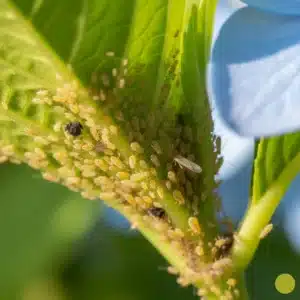
A nightmare for every gardener, Aphids top every chart of the most dangerous pests for plants. Hard to kill and fast to spread, taking only a few weeks to colonize an entire locality, Aphids are the worst among all pests. Keeping an eye on the plants to identify infections and early prevention are the only ways to survive them, a strategy supported by academic research into integrated pest management for flowering shrubs.
How to Identify
Lice like, but with wings, Aphids are small insects that hide under the buckle and leaf when young. They target buds and other sappy parts of the plant, like green leaves and growing twig heads. Wings develop on mature insects, triggering airborne contamination to surrounding areas. A close look will reveal two tailpipes on their back used to suck the immunity out of trees.
Spread
Aphids are born with astounding reproductive capacities. Ladies can deliver without a mate, and the children come with the seed of the next generation. They can even withstand their natural enemy, the cold in winter, by hibernating in cocoons. And in the face of starvation, they can fly to other places in search of food. Together, all these attributes make Aphids highly pervasive and almost an invincible pest to deal with.
Symptoms
Check the shoots, buds, and new leaves for wrinkles, damage, and delayed growth. Aphids live on the life juice of these areas, exploiting and spoiling cells, preventing their growth, and eventually killing them. They leave honeydew, a round, white, stomach waste, all over the branches and leaves. Which later produces black sooty molds attacked by a certain type of fungus.
Prevention
You have to be strategic with Aphids. They are vulnerable to strong pesticides, but so are beneficial insects, like Ladybugs and Lacewings. By statistics, the latter kinds can eat almost one-third of Aphid aggression. Using a water hose to push the killers off offers the most effective solution. But you have to do it in early spring when the number of Aphids is at its lowest.
Black Vine Weevil
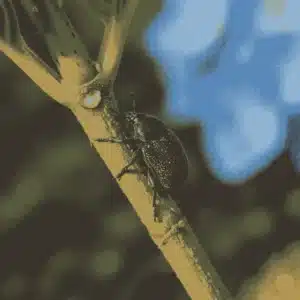
There are only a few other pests that can be as deadly to Hydrangeas as Black Vine Weevils. They live on the roots, stems, and leaves of shrubs and ornamental plants at different phases of their lifecycle. So destructive that a single larva can eat away a full stem, leading a healthy plant to its death. While adult Weevils are less lethal, consuming only leaves to survive. On a full season, they can lay up to 500 eggs each. Conspiring even a deadlier next season.
How to Identify
Black Weevils lay eggs on the land around a stem. So young larvae can reach the root more easily after hatching. Until turning adult, they remain and move underground, slowly corroding the base of a tree. So it’s hard to identify them even when the plant starts to show symptoms. The larva is usually a quarter-inch white worm, with yellow head capsules boxing their eyes. They mature into half-inch black insects with golden speckles on their backs.
Spread
It takes a couple of years for Weevils to become a large outbreak. What starts as a few full-grown Weevils roaming here and there in the garden, after two or three hatching terms, becomes a swarm. Though these wingless creatures don’t top the wall to invade the neighbour’s land. When spawned massively, they can enter houses and creep into doorways, furniture fissures, and bed lines.
Symptom
Weak, tilted trunks and wrinkled, discolored leaf blades are how Hydrangeas scream root issues. These symptoms emerge when Weevils have already damaged the roots’ vascular system. And in most cases, it’s too late to take steps to save them. This is one of the reasons why you need to keep Weevils in mind even before they and their symptoms catch your eye.
Prevention
With a hard shell on their body, acting as a shield against mild regular garden sprays, Black Vine Weevils are hard to hunt down. Water force won’t be much help, as these insects are natural swamp lovers. The young larvae, crawling deeper into the soil, can save themselves from shallow applications of pesticides. So you need to have special strategies.
Some effective measures include:
- Encouraging nematode growth, Weevil’s biological foe. These subterranean microbes eat away at Weevil larvae, reducing disastrous activities. Buy Steinernema kraussei or Heterorhabditis bacteriophora from a botanical pharmacy. Mix them with water and choose a fine evening to apply them on Hydrangea beds
- Regularly take soil samples to find hidden threats. Use tools like magnifying glasses or microscopes to detect eggs and hatchlings. You can also take it to a plant specialist.
Japanese Beetles
Among all the creatures you should watch out for, if you really care about your Hydrangea blooms, Japanese Beetles are the most notorious. Adults, emerging in mid-spring, feed on leaves and petals. Unfortunately, at that time, the flowers reach their fullest length. Their alluring colors and smell draw in more of these Hydrangea bugs. They need to be cured fast before the plants lose their beauty and life.
How to Identify
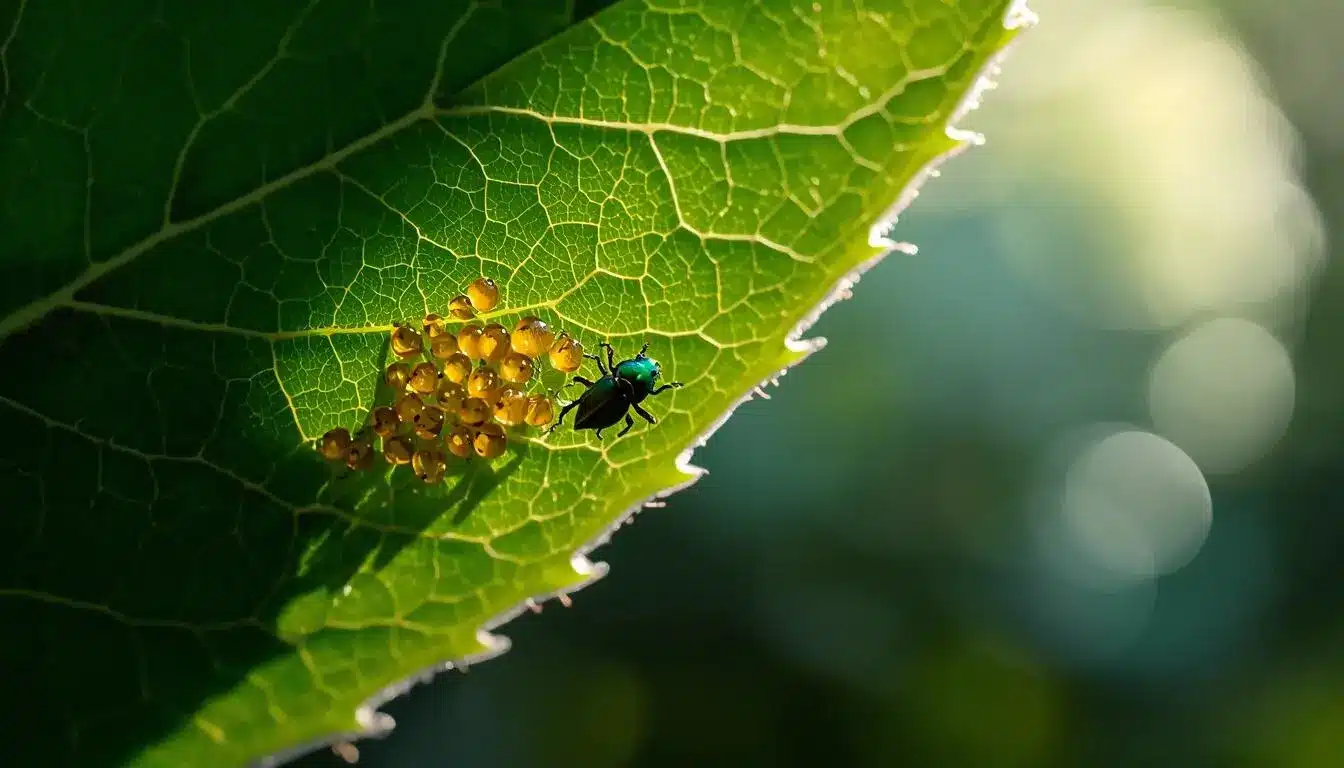
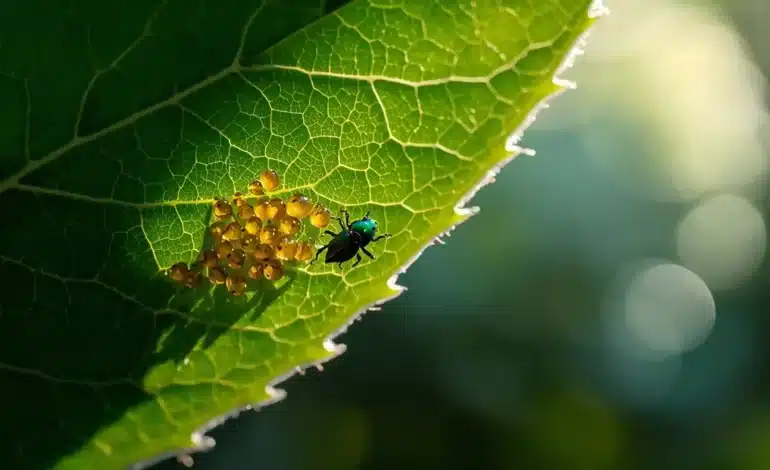
Female beetles lay eggs on the ground, sending larvae into the deeper soil layer to survive on roots. The slow eating continues through several months, until the pupae crawl out into the daylight as mature beetles. Their metallic green face and copper wings make them easy to recognize.
Spread
Japanese Beetles can fly swiftly despite their tank-like body. Social in nature, they can densely infest an entire community within weeks. A healthy beetle can cross miles upon sensing food. When eating, they secrete stimulating pheromones, which act as a beacon for nearby beetles. Driven to it, hundreds of new bugs start to crowd the area.
Symptoms
Beetles create small pores on the leaves. Eventually, they eat away all the green parts, leaving only the veins and primary structure untouched. The leaf becomes a mere skeleton with a thin net of connected veins surrounding it. Shallow digging around the root will unearth the white, crooked larvae.
Prevention
The disproportionate weight of Japanese Beetles doesn’t put them into a struggle during a flight. But this is the feature that makes them imbalanced when struck by an external force. Find a bucket half full of soapy water and hit the roaming beetles with your hand into it. The slippery liquid and the massive weight of their body will prevent them from ascending. To kill larvae, apply chemicals, like Heterorhabditis bacteriophora.
Spider Mite
The tiniest entry on this list is the spider mite; managing these microscopic web-spinning arachnids requires a high level of vigilance compared to larger beetles. Invisible to the naked eye, as they don’t grow beyond one-fiftyth of an inch, they are tiny draculas for your hydrangeas. You won’t even know why your buds are drooling to death while these micropests are having a banquet party living behind the visible line. If not caught and treated in advance, they have the potential to turn into a large epidemic.
How to Identify
You will need somekind of zooming mechanism, like a microscope or a powerful magnifying lens. The most common spider mites found in home gardens are two-striped. They can be light greenish or a soaked yellow in color, with their sides stained with two dark strips. A hairy tentacle on their forehead that they use to suck out the cellulose from leaf and flower cells should also be noticeable under the lens.
Spread
The anthropodium legs, being small and vulnerable, don’t allow spider mites move far. However, thanks to their size and weight, lightweight and sleek, mites can travel by floating into the air, and the range is pretty wide. Not quite helpful, but spider mites have a limited lifespan, living only 5 to 6 weeks, from the hatch to the end of their productive cycle. Round and transparent eggs laid in clusters break in the warmth of the day, optimally 27 degree celsius. The larvae morph into adults within two weeks, which sustain another three weeks until laying the next batch of eggs.
Symptomp
Slow and gradual expansion of brown and dead areas on the leaf. A dense infestation can bring havoc to plants, turning them from green to red in no time. Even though it can’t kill them. Not if they are healthy. Weak and old plants, however, may suffer a more unfortunate fate.
Prevention
The thin body membrane of spider mites, when exposed to insecticides, burns away. Simple chlorine or alcohol sprays, mixed with water, will do the trick. But you have to be attentive in finding the crevices and joints where mites accumulate over time. A regular follow-up check-up is necessary to make sure that the problem is gone forever or for the season.
Scale
Scales get their name as they hold on to a particular spot on a plant, hunker down there immobile for a long time, look like a second layer of the buckle, and feed on the sap underneath. Despite their innocent, still, and silent appearance, they can cause serious damage. Often working as a base for a second or third type of infestation, inviting other pests.
How to Identify
Like mites, scales are microbial. Under a magnifying glass, they may look white, brown, or black disc-like substances, depending on their species. There are almost 80,000 scale types, but the most common are white, soft and armored brown kinds. Males grow wings and spend their short life by flying around. While females stick to the buckle, bringing damage.
Spread
Usually, scales grow naturally and rarely attack a neighbouring plant. But you can carry them with your clothing or hands when tending to the garden and take them to other plants. Young nymphs, after detaching from their mother, creep up to locate a new feeding zone and settle. During this migration, many often get blown away by the wind and find a home.
Symptomp
A large infested area reveals itself. Together, colonized scales form a discolored layer on a regular twig. The stomached sap is released in sticky honeydew, which later turns into black sooty mold. Apart from it, you may see white sticky residues here and there. They block sunlight, slow down photosynthesis, and destroy the plant from the inside and outside.
Prevention
The best time to apply insecticide is when nymphs come out from their mothers’ shelter to move into a new place. It reduces further spread, both localized and airborne invasions. You can also scrap them by hand if their number is at a minimum, like a couple or around.
Wrapping Up
No more living in confusion over concerns like what is eating my hydrangea leaves. With the information described here, you can identify an attack and the responsible pest just by looking at the symptoms. Honeydews are a major sign of sap-sucking predators, like aphids and scales. While brown and blackening leaves signal pigment and cell eaters like Black Weevils and Japanese beetles. To figure out an effective preventive measure, closely study their lifecycle, structure, and invaded regions.
People Also Ask
Do Hydrangeas Attract Bugs?
Bugs are known for their natural attraction toward ornamental plants. They are drawn to the bright, addictive colors and scents of the flowers and need supple and mellow cells to feed on. And hydrangeas provide them with all those things. This makes them an ideal breeding ground for bugs.
Do Hydrangeas Attract Ants?
Ants follow sweet foods. A full bloom with its pollen may draw some attention, but it’s not something to worry about. What makes ants a formidable concern is their love for honeydew and other digested products that pests like aphids and scales make. It marks ants as a noteworthy symptom of a greater threat.
What Can I Spray On Hydrangeas For Bugs?
Not all insecticides are effective against all kinds of hydrangea pests and diseases. Most bugs have wings to relocate, while some have evolved with protective shells. That’s why many gardeners choose to treat them in their natal phase, when they are most exposed to chemicals. Soap water and neem oil are the best spray choices for treating adult bugs, like Beettles and Weevils. For underground larvae, you will need strong corrosives, like Steinernema kraussei or Heterorhabditis bacteriophora.