Why Is My Hydrangea Not Growing? A Complete Diagnostic Guide to Stunted Growth and Revival

If your hydrangea looks stuck in time, refusing to put on new growth or reach its expected size, you’re not alone. This frustrating problem affects gardeners across all experience levels, but the good news is that most cases of hydrangea growth problems can be fixed once you understand what’s holding your plant back.
The Elimination Process – Is Your Plant Dead, Dormant, or Stunted?
Before you start treating your hydrangea, you need to figure out what you’re actually dealing with. A plant that’s simply dormant needs a different approach than one that’s genuinely struggling.
The Snap Test for Vitality
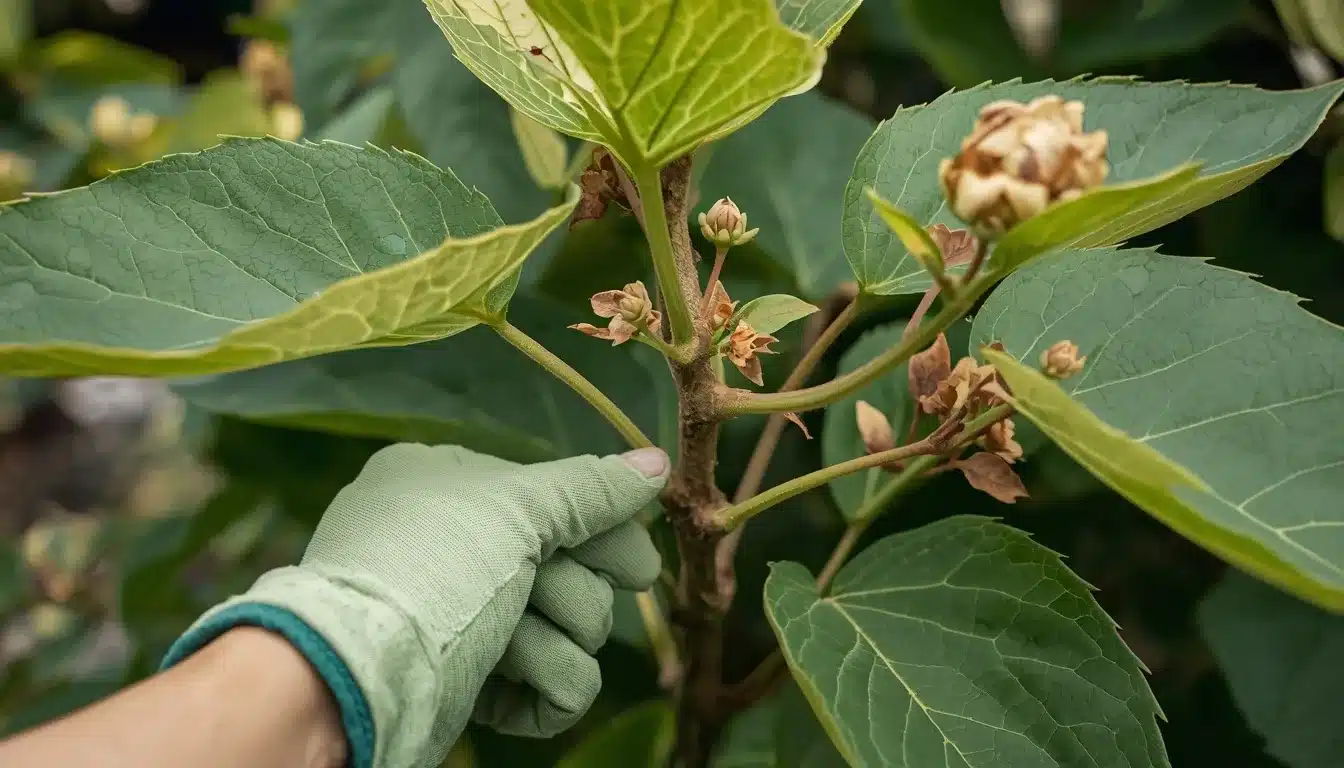
Find a branch near the main stem and try bending it gently. If it flexes and feels springy, your plant is alive and well. If it breaks with a dry snap, that section has died back. This simple test tells you whether you’re looking at a living plant with growth issues or if you need to determine if a shrub is capable of regenerating from the crown after severe dieback.
Understanding the “Sleep, Creep, Leap” Growth Cycle
Hydrangeas are notoriously slow starters, especially in their first few years. During year one, they’re focused almost entirely on root development below ground, which gardeners call the “sleep” phase. You won’t see much happening above soil level, and that’s completely normal.
The second year brings the “creep” phase, where growth remains subtle but the plant is quietly building strength. Only in the third year does the “leap” happen, when you’ll finally see the robust growth and blooms you’ve been waiting for. Many gardeners give up too early, not realizing their hydrangea is right on schedule, which is also a common reason for a failure to produce terminal buds or seasonal flower heads.
Transplant Shock Signs
If you recently moved your hydrangea or brought it home from the nursery, it may have stopped growing entirely. This is transplant shock, and it’s the plant’s way of conserving energy while it adjusts to new conditions. The foliage might look healthy but simply refuse to expand.
The best remedy is consistent moisture. Keep the soil evenly damp (not soggy) for the first several weeks after transplanting. Most hydrangeas bounce back within a month or two once their roots settle in.
Maturity Factors
Young plants grown from cuttings can take three to five years before they have enough stored energy to produce significant foliage or blooms. If your hydrangea came from a cutting rather than a nursery container, be patient. It’s building the foundation it needs for future growth.
Environmental “Goldilocks” Zones: Mastering Sun, Water, and Location
Most hydrangea growth problems trace back to environmental stress. These plants are particular about their growing conditions, and even small adjustments can make a dramatic difference.
The East-Facing Advantage
Where you position your hydrangea matters more than almost any other factor. An east-facing location gives your plant gentle morning sun followed by afternoon shade, which is ideal for most varieties.
South-facing spots often deliver too much intense heat. When a hydrangea gets blasted by hot afternoon sun, it stops growing and focuses all its energy on survival. The leaves may look fine, but new growth grinds to a halt. If your plant is in a south or west-facing location and showing signs of stalled growth, consider moving it during the dormant season.
The Knuckle Test and Moisture Meters
Checking soil moisture seems basic, but many gardeners either overwater or underwater their hydrangeas without realizing it. Stick your finger into the soil up to the second knuckle. If it feels dry at that depth, your plant needs a thorough watering.
For better accuracy, invest in a simple soil moisture meter. These inexpensive tools tell you exactly what’s happening in the root zone, where it actually matters. You might discover that the top inch of soil is dry while the deeper layers are waterlogged, which explains why your hydrangea refuses to grow.
Heat Stress vs. Drought Stress
Learn to tell the difference between these two conditions. Heat stress causes drooping stems and flagging leaves on hot afternoons, but the plant typically recovers its turgor pressure once the sun sets. This is uncomfortable for the hydrangea but not fatal.
Drought stress is more serious. You’ll see permanent leaf damage including blackened edges, crispy brown spots, or leaves that stay limp even after temperatures drop. A hydrangea suffering from true drought stress will stop all growth until conditions improve.
Hardiness Zone Matching
To ensure long-term success, verify that your specific variety aligns with your local climate; you can consult comprehensive shrub establishment guidelines to match your cultivar with the correct temperature and moisture requirements. Bigleaf hydrangeas thrive in zones 5 through 11 but struggle in colder areas. Panicle hydrangeas handle zone 3 temperatures without trouble.
If your variety isn’t suited to your climate, it will spend all its energy just surviving winter. There won’t be anything left over for growth during the growing season. This is why some hydrangeas never seem to get bigger no matter what you do.
Underground Inhibitors: Soil Chemistry and Root Space
The most common hydrangea growth problems happen where you can’t see them. Below ground, invisible factors like pH levels and compacted soil can completely halt development.
Nutrient Deficiency Profiling
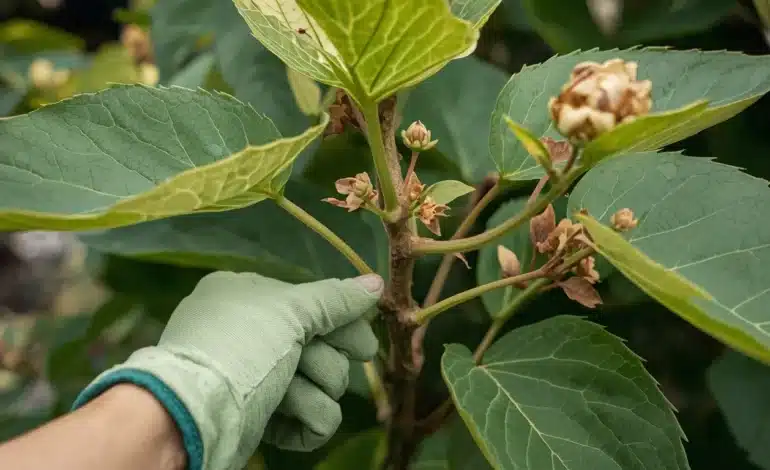
Your hydrangea’s leaves tell a story about what’s happening underground. A loss of chlorophyll in older foliage or pale, lime-colored veins typically signals a nitrogen deficiency. Without enough nitrogen, the plant can’t produce the proteins needed for new growth.
A lack of new shoots and buds points to phosphorus deficiency. Phosphorus drives root development and bud formation. Without it, your hydrangea may look green and healthy but simply refuse to expand or flower.
The pH Growth Block
Hydrangeas prefer slightly acidic soil with a pH between 6.0 and 6.5. When soil becomes too alkaline (above 7.0), something interesting happens. The nutrients your plant needs are present in the soil, but the roots physically cannot absorb them.
This creates a situation where you might fertilize regularly and still see no growth. The plant is starving despite having food all around it. Test your soil pH with an inexpensive kit from any garden center. If the pH is off, you can adjust it with sulfur or lime; otherwise, you may notice vibrant floral pigments reverting to a muddy emerald hue as the plant struggles to process minerals.
Identifying Root-Bound Stunting
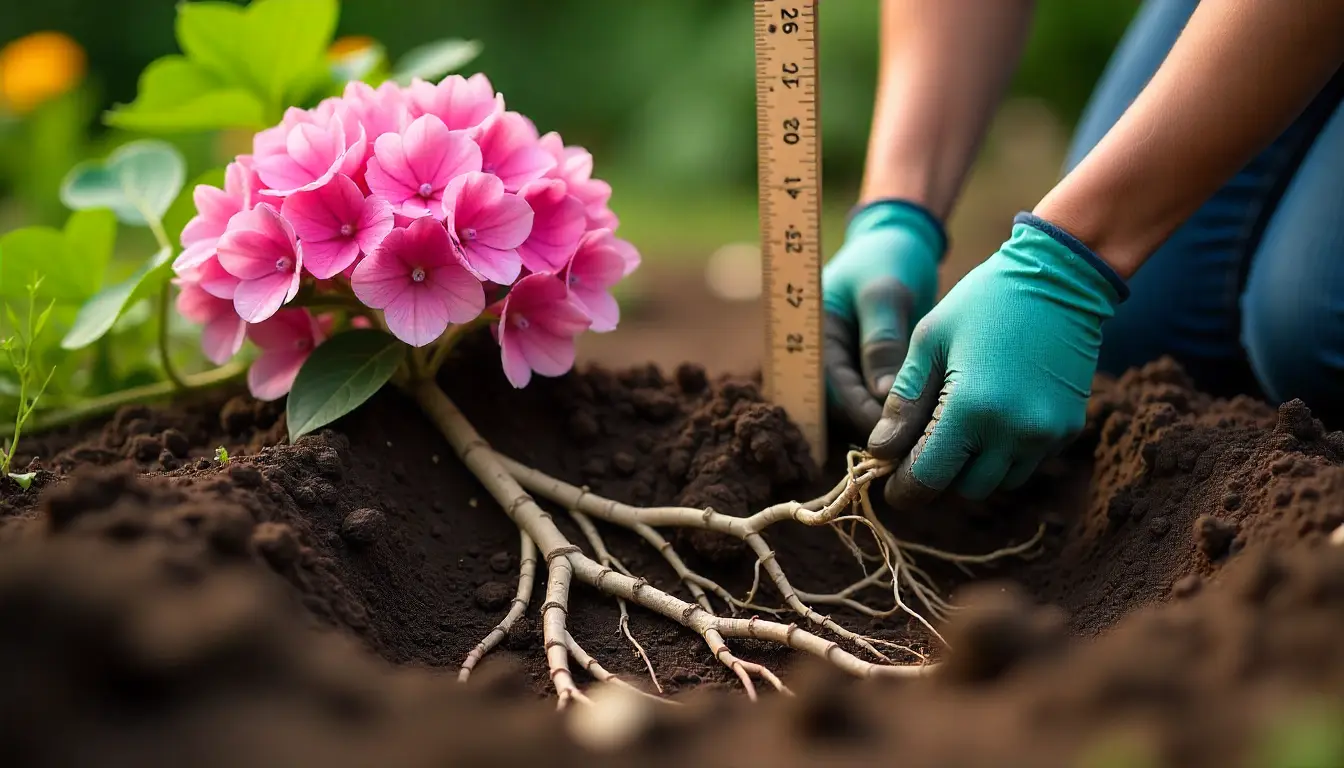
In containers, hydrangeas can become root-bound quickly. The roots grow in tight circles around the pot’s edge, eventually choking themselves. Even after transplanting a root-bound plant into the ground, those circling roots may never spread outward properly.
Heavy clay soil creates a similar problem. The roots hit the hard clay and can’t penetrate further, so the plant stays the same size year after year. If you suspect this issue, dig down near the base of the plant and check the root pattern. You may need to physically break up circling roots and amend the surrounding soil.
Drainage and Oxygen Starvation
Roots need oxygen as much as they need water. In poorly draining soil, water fills all the air pockets and the roots essentially suffocate. Root rot sets in, and growth stops completely.
Check drainage by digging a hole about 12 inches deep, filling it with water, and seeing how long it takes to drain. If water is still standing after an hour, your drainage is inadequate for hydrangeas. You’ll need to either amend the soil heavily with compost and sand or create a raised bed with better drainage.
Maintenance Mistakes: Pruning and Timing Errors
Sometimes the reason your hydrangea isn’t growing is because of something you did, or something you did at the wrong time. These mistakes are easy to make but also easy to correct.
The One-Third Rule of Pruning
Never cut back more than one-third of your hydrangea’s height in a single pruning session. Removing too much at once shocks the plant’s system and forces it to spend the next growing season recovering instead of expanding.
Some gardeners, seeing a struggling plant, decide to cut it way back in hopes of encouraging fresh growth. This usually backfires. A stressed plant needs its leaves and branches to produce energy through photosynthesis. Taking away too much foliage just makes the problem worse.
Old Wood vs. New Wood Identification
This distinction is critical. Some hydrangeas bloom on old wood (last year’s growth) while others bloom on new wood (this year’s growth). If you prune an old wood bloomer in late winter or early spring, you’re cutting off all the buds that would have grown and flowered that season.
Bigleaf and Oakleaf hydrangeas bloom on old wood. Panicle and Smooth hydrangeas bloom on new wood. Know which type you have before you make any cuts. For old wood bloomers, prune only right after flowering ends in summer. For new wood bloomers, prune in late winter or early spring.
The Wrong Time Planting Trap
Planting a hydrangea in the heat of mid-summer is asking for trouble. The plant has to fight against intense sun and heat while trying to establish new roots. Most of its energy goes to survival, leaving nothing for growth.
The ideal planting windows are late spring (after the last frost) or early fall (at least six weeks before the first frost). During these periods, temperatures are moderate and rainfall is typically more reliable. Your hydrangea can focus on root development without battling extreme weather.
Frost Shock Recovery
Late spring frosts can kill emerging buds and young shoots on hydrangeas. If this happens, resist the urge to fertilize heavily or try to force new growth. The plant needs time to recover naturally.
Remove any clearly dead or blackened growth, but otherwise leave the plant alone for the remainder of the season. It will likely send out new shoots from lower on the stems, though you may lose that year’s blooms. By the following year, it should be back on track.
Advanced Revival Tactics: Real-World Experience and Tips
When standard care isn’t enough, these advanced techniques can help revive even severely stunted hydrangeas.
Soaker Hose Deep Hydration
A severely drought-stressed hydrangea needs more than what a watering can or hose spray can provide. The water needs to penetrate deep into the root zone, and surface watering often doesn’t reach far enough down.
Set up a soaker hose around the base of the plant and let it run for about 10 minutes. Do this three to four times per week during hot weather. This slow, deep watering encourages roots to grow downward into cooler, more stable soil layers. Over time, the plant becomes more resilient and growth picks up significantly.
The Mulch Insulator
A thick layer of organic mulch acts like insulation for the soil. It keeps the root zone cool during hot weather and prevents moisture from evaporating too quickly. This is particularly important in hot climates where hydrangeas struggle.
Use pine needles, shredded bark, or compost. Spread it about three to four inches thick, keeping it a few inches away from the main stem to prevent rot. Replenish the mulch layer each spring. Many gardeners consider this their secret weapon for consistent hydrangea growth in challenging conditions.
Strategic Fertilization
High-nitrogen fertilizers produce lush, dark green leaves but often result in weak, floppy stems that can’t support the plant’s weight. The growth looks impressive initially but doesn’t lead to a sturdy, well-structured plant.
Instead, use a balanced, slow-release fertilizer formulated for flowering shrubs. Apply it in early spring when growth begins and again in mid-summer if needed. This steady supply of nutrients builds strong stems and healthy root systems that support long-term growth.
Winter Insulation Wraps
In cold regions, winter damage is often the hidden culprit behind stunted growth. Old wood varieties are particularly vulnerable to freeze damage that kills the buds needed for next season’s growth.
Before the first hard freeze, wrap your hydrangeas loosely with burlap or frost cloth. Create a barrier that protects against wind and extreme cold without smothering the plant. This simple step can mean the difference between a plant that bounces back quickly in spring and one that spends half the summer recovering from winter damage.
Frequently Asked Questions
How can I tell if my hydrangea is dead or just dormant?
Use the snap test on several branches throughout the plant. Bend them gently near the main stem. Living branches will flex, while dead ones snap cleanly. Also check for green tissue just under the bark by lightly scraping with your fingernail. Green means alive, brown means dead. Keep in mind that hydrangeas leaf out later than many other shrubs, so don’t give up too early in spring.
Why is my hydrangea healthy and green but not getting any bigger?
This usually means the plant is in survival mode rather than growth mode. Common causes include too much direct sun, inconsistent watering, compacted or poorly draining soil, or being planted in the wrong hardiness zone. The plant has enough resources to maintain existing foliage but not enough to expand. Evaluate your growing conditions and make adjustments based on the guidelines above.
What is the fastest way to fix a hydrangea with stunted growth?
Start with the basics: ensure proper watering, add mulch, and check that the plant is in an appropriate location for its variety. Test your soil pH and correct it if needed. If the plant is root-bound, carefully work the roots outward. Most stunted hydrangeas respond within six to eight weeks once the underlying problem is addressed, though some may take a full growing season to fully recover.
Can I use coffee grounds to make my hydrangea grow faster?
Coffee grounds can help acidify soil slightly over time, which benefits hydrangeas. However, they work slowly and aren’t a quick fix. Spread used coffee grounds around the base of the plant in a thin layer and work them into the top inch of soil. They also add organic matter as they break down. Don’t expect dramatic results, but coffee grounds can be part of a comprehensive care routine.
Why are the new leaves on my hydrangea so small?
Small new leaves typically indicate a nutrient deficiency, inadequate water, or root problems. The plant doesn’t have enough resources to produce full-sized foliage. Check soil moisture and test for nutrient deficiencies. Small leaves can also appear after severe pruning or winter damage, as the plant is regrowing from scratch. These should increase in size as the plant recovers.
How often should I water a newly planted hydrangea to ensure it grows?
For the first two to three weeks, water daily if there’s no rain. After that, transition to deep watering three to four times per week. The goal is to keep the root zone consistently moist but never waterlogged. After about two months, you can reduce watering to once or twice weekly, adjusting based on weather and soil conditions. Consistent moisture during the establishment period is the single most important factor for growth.
Does pruning a hydrangea actually make it grow back thicker?
Light pruning can encourage bushier growth by stimulating dormant buds lower on the stems. However, heavy pruning often has the opposite effect, causing stress that slows growth for the next season. The key is timing and moderation. Prune new wood varieties in late winter to encourage branching. For old wood varieties, only prune immediately after flowering and remove no more than one-third of the plant’s height. Proper pruning encourages fuller growth, but incorrect pruning can set your plant back significantly.