![Hydrangea Root Benefits and Side Effects: [Complete Guide 2026]](https://gardenersoul.com/wp-content/uploads/2025/12/Benifits-770x470.webp)
Hydrangea Root Benefits and Side Effects: [Complete Guide 2026]

Have you ever walked past a hydrangea bush with its beautiful blue and purple flowers and wondered if there’s more to this plant than meets the eye? Well, there is. Hidden underground, hydrangea roots have been used for hundreds of years as a natural remedy for kidney and bladder problems.
But before you rush out to buy hydrangea root supplements, let’s dig into what science actually says about this traditional herbal remedy. We’ll cover the real benefits, potential risks, and everything you need to know to make an informed decision.
What Is Hydrangea Root?
Hydrangea root comes from the underground parts of hydrangea plants. The genus Hydrangea includes over 70 plant species, but three types are commonly used for medicine:
- Hydrangea arborescens (smooth hydrangea) – Native to the eastern United States.
- Hydrangea paniculata – Native to Asia.
- Hydrangea macrophylla (bigleaf hydrangea) – Native to Asia.
The part used in herbal medicine is the root and rhizome (underground stem). Cherokee Native Americans historically used hydrangea root for kidney stones, and this traditional use has continued into modern herbal medicine.
Understanding Hydrangea Plant Roots
Before we talk about medicinal roots, let’s quickly clear up something: the hydrangea root system in your garden is different from the medicinal roots used in supplements.
Hydrangea Root Growth (For Gardeners)
Depth: Hydrangea roots typically grow 12-18 inches deep, though they can reach 2-3 feet. Most roots stay within the top 6 inches of soil.
Spread: Roots extend laterally beyond the canopy, often 2-3 feet wide.
Appearance: Hydrangeas have a fibrous root system with dense, thin roots—not thick tree-like roots. Healthy roots are white, firm, and odor-free. For those growing these shrubs at home, maintaining a healthy root system often starts with the right nutrients; you might even consider supplementing garden soil with organic kitchen waste to help adjust the environment for better growth and bloom color.
Root Type: Shallow, no central taproot. The main system consists of rhizomes (underground stems) that produce fibrous roots.
Traditional Uses of Hydrangea Root
Hydrangea root has been used for centuries, particularly by Native American tribes, for its medicinal properties. The primary traditional uses include:
Kidney and Urinary Health
This is the main reason people turn to hydrangea root. Traditional herbalists used it for:
- Kidney stones.
- Bladder infections.
- Urinary tract infections (UTIs)
- Prostate problems.
- Enlarged prostate (BPH)
Hydrangea root was believed to increase urine flow, reducing the tendency for kidney stones to grow larger and making them easier to pass.
Other Traditional Applications
People also used hydrangea root for:
- Reducing inflammation.
- Supporting liver health.
- Treating arthritis and joint pain.
- Relieving symptoms of gout.
Important Note: Just because something has been used traditionally doesn’t mean it’s proven to work. Let’s look at what modern science tells us.
Herbal Actions and Properties of Hydrangea Root
Herbalists classify plants by their effects (actions) and nature (energetics). This explains the hydrangea root traditional use for urinary issues.
Main Actions
Active compounds (hydrangin, coumarins, saponins) produce these effects:
| Action | What It Does | Use |
|---|---|---|
| Antilithic | Dissolves kidney and bladder stones | Breaks down stone formation |
| Lithagogue | Expels formed stones | Removes gravel from the urinary tract |
| Demulcent | Soothes irritated tissue | Eases burning and pain |
| Diuretic | Increases urine output | Flushes bacteria and minerals |
| Analgesic | Relieves pain | Reduces inflammation discomfort |
Energetic Profile
Cooling: Treats inflammation, burning sensations, and fever.
Drying: Addresses fluid retention and stone formation.
Hydrangea Root Benefits: What Science Says
Here’s where things get interesting. While human studies are limited, animal and lab research have shown some promising results.
1. Kidney Health Support
What Research Shows:
Animal studies found that hydrangea extract helped reduce blood urea nitrogen (BUN) in diabetic rats. High BUN levels indicate kidney problems.
Studies in mice show that skimmin, an active compound in hydrangea extract, reduced BUN, blood creatinine, and urinary albumin excretion in mice with kidney inflammation. These are all markers of kidney dysfunction.
The Reality Check:
While animal studies show promise, there are no human clinical trials to back up these claims. What works in mice doesn’t always work in people.
2. Natural Diuretic Properties
The chemicals in hydrangea may cause increased urine output, which is why it’s been used for urinary tract problems.
Practical Application:
By increasing urine flow, hydrangea root may help flush bacteria from the urinary tract and prevent kidney stones from growing larger.
3. Anti-Inflammatory Effects
Hydrangea root is rich in coumarin compounds that may offer anti-inflammatory properties.
Research shows it may:
- Reduce inflammatory markers like TNF-α, IL-1β, NO, and IL-6 in animal studies.
- Inhibit infiltration of inflammatory cells into kidney tissue.
4. Antioxidant Properties
Coumarins in hydrangea root have antioxidant properties that significantly reduce oxidative stress in mouse studies.
Antioxidants help protect your cells from damage caused by free radicals, which can lead to chronic diseases.
5. Liver Protection
Test-tube research found multiple compounds in hydrangea stems that may protect from liver toxicity.
6. Potential for Bladder Cancer
One test-tube study found that hydrangenol, a compound in hydrangeas, may inhibit bladder cancer cell reproduction.
Critical Point: This was only in a test tube. It’s a long way from test tubes to treating actual cancer in humans.
7. Blood Sugar Management
Lab studies show skimmin improved blood sugar uptake and reduced insulin resistance, suggesting potential benefits for type 2 diabetes.
Comparison with Other Urinary Herbs
| Herb/Substance | Main Benefits | Compared to Hydrangea |
|---|---|---|
| Uva Ursi | Strong antimicrobial for UTIs | Better for infections, lacks soothing properties, may irritate kidneys at high doses |
| Cornsilk | Soothes and mildly increases urine | Better for irritation relief, weaker at breaking down stones |
| Cranberry | Prevents E. coli from sticking to bladder | Only preventative, doesn’t treat existing stones or irritation |
| Potassium Citrate | Prevents calcium oxalate stones (prescription) | Medical treatment with strong evidence, unlike hydrangea |
Side Effects of Hydrangea Root
Now for the part you really need to pay attention to: the risks.
Common Side Effects
Side effects are typically reported with doses over 2 grams of dried root:
- Nausea and vomiting
- Upset stomach and diarrhea
- Dizziness
- Chest tightness
- Stomach and intestinal irritation
Allergic Reactions
The compound hydrangenol may cause allergic reactions when the hydrangea root comes in direct contact with skin. Symptoms include:
- Contact dermatitis.
- Skin rash.
- Inflammation.
Toxicity Concerns
Using more than 2 grams at a time is likely unsafe.
Long-term use is also likely unsafe.
Critical Safety Warnings: Who Should AVOID Hydrangea Root?
Pregnant and Breastfeeding Women
There isn’t enough information available on safety, so you should avoid using hydrangea root altogether if pregnant or breastfeeding.
People Taking Lithium (CRITICAL WARNING)
Because hydrangea root may have a diuretic effect, it may interfere with how your body gets rid of lithium, raising lithium levels and causing serious side effects, including nausea, vomiting, muscle weakness, or even kidney failure.
If you take lithium, do NOT use hydrangea root without talking to your doctor first.
People with Kidney Disease
If you already have kidney problems, be very careful. While the hydrangea root is traditionally used for kidney health, we don’t have enough research to know if it’s safe for people with existing kidney disease.
People with Gastrointestinal Issues
The herb can irritate your stomach and intestines, so avoid it if you have sensitive digestion.
How to Use Hydrangea Root Safely
If you decide to try hydrangea root after talking with your healthcare provider, here’s what you need to know.
Available Forms
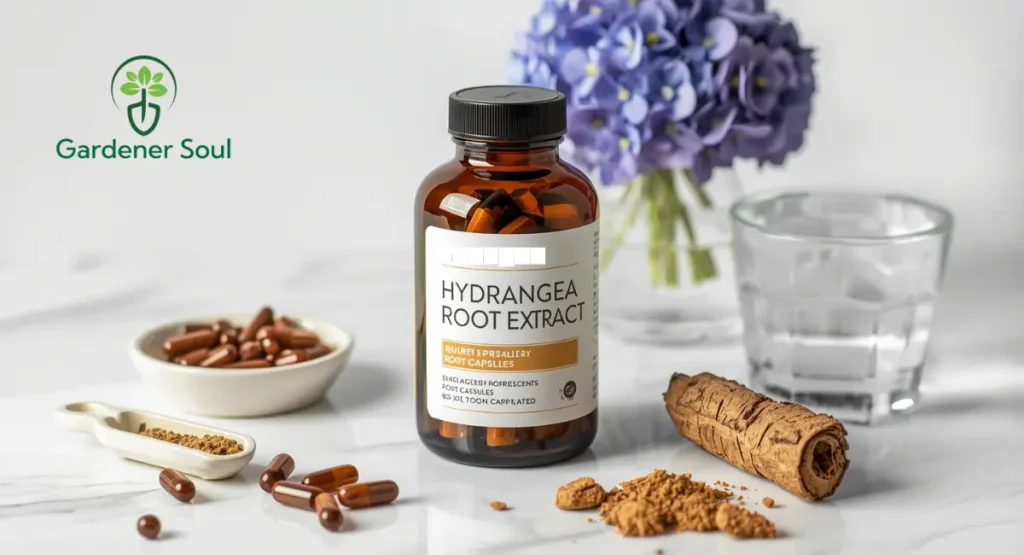
Hydrangea root supplements come in pills, powders, tinctures, liquid extracts, and even sugary syrups.
Dosage Guidelines
No scientifically recommended dosage exists due to a lack of clinical trials. The following are based on traditional herbalist practices:
Dried Root/Powder:
Start with 1/2 teaspoon (1 gram), up to twice daily.
Never exceed 2 grams per dose or 4 grams daily without medical supervision—toxicity risk increases above 2 grams.
Tincture (1:5):
1-2 mL, taken 2-3 times daily.
Safety Note: Start with the lowest dose and stop immediately if side effects occur.
How to Make Hydrangea Root Tea
Many people brew powdered or dried hydrangea root into tea by simmering 1 tablespoon of hydrangea root in 8 ounces of water.
Simple Tea Recipe:
- Add 1 tablespoon (about 15 grams) dried hydrangea root to 8 oz (250 mL) water.
- Simmer for 10-15 minutes.
- Strain before drinking.
- Drink 1-2 times daily.
Caution: This amount may exceed the 2-gram safety threshold, so consider using less root or drinking smaller portions.
Quality Matters
When buying hydrangea root supplements:
- Choose reputable herbal suppliers.
- Look for third-party testing.
- Verify the species (H. arborescens is most common in North America)
- Check for organic certification if possible.
- Avoid products with unnecessary additives.
Important Warning: The leaves of hydrangea plants contain toxic substances and should never be consumed. Only the root and rhizome are used medicinally.
Drug Interactions
⚠️ CRITICAL: DO NOT take hydrangea root with Lithium.
Hydrangea’s diuretic effect can cause toxic lithium buildup, leading to nausea, vomiting, muscle weakness, or kidney failure. Consult your doctor immediately.
Hydrangea may also interact with:
- Diuretics (water pills): May increase effects, causing dehydration or electrolyte imbalance.
- Blood sugar medications: May affect blood sugar levels, requiring monitoring.
- Anti-inflammatory drugs: Potential for increased effects or side effects.
Always inform your doctor about all supplements you’re taking.
Evidence-Based Alternatives for Kidney & Urinary Tract Support
If you’re looking for natural kidney or urinary tract support, consider these options with more research behind them:
For Kidney Stones:
- Lemon juice: May help prevent calcium stones.
- Adequate water intake: Best prevention method.
- Potassium citrate: Prescribed by doctors for stone prevention.
For UTIs:
- Cranberry – Research suggests cranberries may help reduce both frequency and symptoms of UTIs.
- D-mannose – Some evidence for UTI prevention.
- Proper hydration – Helps flush bacteria.
For Inflammation:
- Turmeric/Curcumin – Well-studied anti-inflammatory.
- Omega-3 fatty acids – Strong evidence for reducing inflammation.
- Ginger – Traditional anti-inflammatory with research support.
The Bottom Line: Should You Try Hydrangea Root?
Here’s my honest take based on the research:
The Case FOR Trying It:
| Why You Might Try It (The Upside) | Why You Should Be Cautious (The Downside) |
| Long History of Use: Has been utilized in traditional practices for hundreds of years. | Zero Human Data: There are no clinical trials in people to confirm its effectiveness or safety. |
| Encouraging Early Results: Animal studies show promise, which is a good starting point for research. | Risk of Adverse Effects: The potential for unwanted or harmful side effects exists. |
| Generally Tolerated: Appears safe when taken in small quantities (under 2 grams), according to limited reports. | Severe Drug Interaction: It is highly dangerous when combined with lithium. |
| Supports Current Care: Could potentially serve as a helpful addition alongside your main treatment plan. | Not for Everyone: It is strictly unsafe for individuals who are pregnant or nursing. |
| Appeals to Herbalists: A good choice if you prefer natural, plant-based remedies. | Proven Options Exist: Some alternatives have been extensively studied and validated. |
| Dosing is Unknown: There are no official, standard guidelines for how much to take safely and effectively. |
My Recommendation:
If you’re considering hydrangea root:
- Talk to your doctor first – Especially if you take any medications.
- Don’t use it as a replacement for proven medical treatments.
- Start with tiny amounts if approved by your healthcare provider.
- Watch for side effects like stomach upset or dizziness.
- Buy from reputable sources only.
- Don’t exceed 2 grams daily.
- Stop immediately if you experience any negative reactions.
Skip the hydrangea root if you:
- Are you pregnant or breastfeeding
- Take lithium medication
- Have kidney disease
- Have gastrointestinal problems
- Are you looking for a proven treatment
Frequently Asked Questions
Q: Can the hydrangea root really dissolve kidney stones?
A: The plant does not directly reduce the size of stones, but helps by increasing urine flow, reducing the tendency for stones to grow. There’s no proof it dissolves existing stones.
Q: How long does it take to work?
A: We don’t know. No human studies are measuring how quickly effects appear.
Q: Can I use hydrangea from my garden?
A: No! Garden hydrangeas may have lost medicinal qualities through hybridization, and the leaves contain toxic substances. Only use properly prepared medicinal roots from reputable suppliers.
Q: Is hydrangea root a “water pill”?
A: The chemicals in hydrangea may cause increased urine output, giving it diuretic-like properties, but it’s not the same as prescription diuretics.
Q: Can I take hydrangea root every day?
A: Long-term use is likely unsafe. If you do use it, take breaks every few weeks.
Q: What’s the difference between the hydrangea root and the hydrangea flowers?
A: The root and underground stem (rhizome) are used medicinally. The flowers are purely ornamental, and the leaves are toxic.
Final Thoughts
Hydrangea root is one of those herbal remedies that’s stuck between tradition and science. It has centuries of use behind it and some interesting animal research, but it’s lacking the human studies we need to truly understand if it works and is safe.
While modern herbalists continue to use it for conditions like UTIs and kidney stones, the scientific evidence remains inconclusive.
If you’re dealing with kidney stones, UTIs, or other urinary problems, your best bet is to:
- See a qualified healthcare provider first.
- Get a proper diagnosis.
- Follow evidence-based treatment.
- Consider herbal options only as complementary support with your doctor’s approval.
Remember: Natural doesn’t always mean safe, and traditional use doesn’t necessarily equate to proven effectiveness. Make informed decisions about your health by weighing the limited benefits against the known risks.
Medical Disclaimer: This article is for informational purposes only and does not constitute medical advice. Always consult a qualified healthcare professional before starting any new supplement, especially if you have pre-existing health conditions or take medications. Hydrangea root is not intended to diagnose, treat, cure, or prevent any disease.